From BlackRock to Retail Investors, everyone is piling into Real-World Assets (RWAs)


For decades, global capital markets have followed a predictable evolution: the slow transition from analog paper to electronic databases. Today, we are witnessing the next phase of that evolution: the migration of traditional financial instruments onto distributed ledger technology.
The tokenization of Real-World Assets (RWAs) transitioned from theoretical exercises on whitepapers into a structural pillar of modern finance. By bridging the gap between traditional finance and DeFi, RWAs are reshaping how capital is originated, distributed, and settled.
In this article on our series on RWAs, we take an in-depth look at why the RWA sector has reached a critical inflection point, and why both institutional giants and retail investors are aggressively accumulating on-chain assets.
The $29 Billion Tipping Point
To understand the velocity of this financial migration, we only need to look at the data. As we covered last week, by early 2026, the distributed on-chain value of the RWA sector climbed past the $29 billion mark, a growth not driven by crypto-native speculation, but fueled by a demand for capital efficiency.
Traditional asset classes, such as U.S. Treasuries, money market funds, private credit, and real estate, are being brought on-chain to solve legacy financial bottlenecks. Blockchain technology introduces 24/7 liquidity, instantaneous (T+0) settlement, and automated compliance through smart contracts. For institutional capital, this represents "operational alpha" - the ability to reduce administrative costs and counterparty risk while maximizing yield.
The Institutional Vanguard: BlackRock’s BUIDL
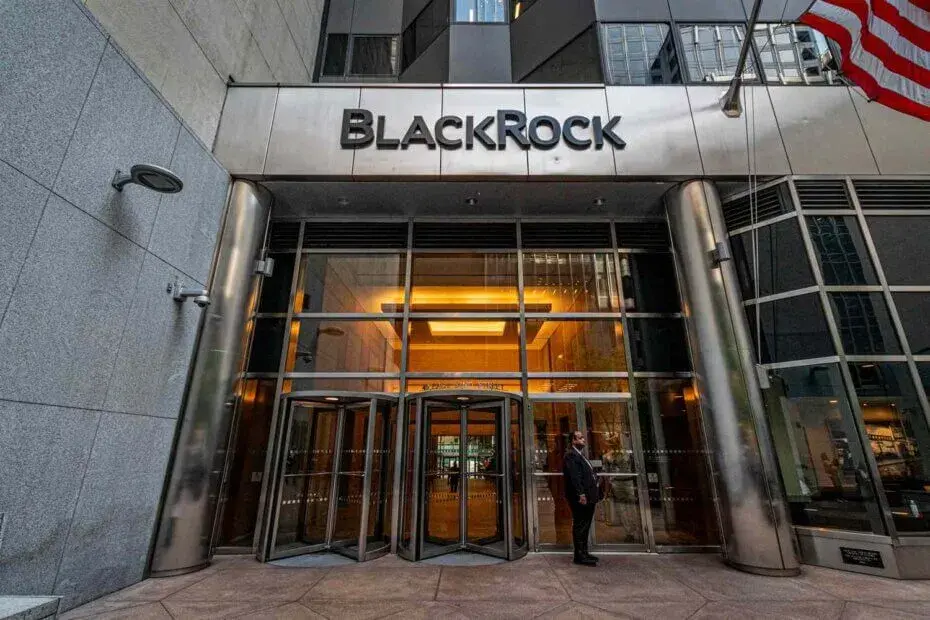
In the financial sector, widespread adoption requires a catalyst, and in the context of RWAs, that catalyst is BlackRock. The launch and subsequent popularity of BlackRock’s USD Institutional Digital Liquidity Fund (BUIDL) was the ultimate institutional signal. By May 2026, the BUIDL fund surpassed $2.5 billion in total asset value.
When the world’s largest asset manager (overseeing roughly $10 trillion in global assets) deploys a tokenized fund on a public blockchain, it fundamentally alters the risk calculus for the rest of Wall Street. BlackRock’s success with BUIDL proves that institutional-grade security, regulatory compliance, and blockchain architecture can seamlessly coexist. In traditional finance, when a market leader of this magnitude moves, it establishes a new fiduciary benchmark. Hedge funds, pension funds, and tier-one banks followed and started exploring asset tokenization in order to remain competitive.
Global banking giants including JPMorgan, HSBC, Société Générale, and Citi are building blockchain-based settlement networks, tokenized collateral systems, stablecoins, and digital bond platforms. JPMorgan's Onyx already processes billions of dollars in daily transaction volume, while BlackRock itself has utilized JPMorgan's Tokenized Collateral Network in live institutional transactions. These developments demonstrate that tokenization is not merely an efficiency upgrade but a critical component of modern financial infrastructure.
Consumer-facing financial institutions are also embracing the technology. PayPal's PYUSD stablecoin has reached multi-billion-dollar scale, while Visa now utilizes public blockchains such as Solana for settlement processes behind certain crypto-linked payment products. These examples show that blockchain infrastructure is progressively moving beyond niche crypto applications and into mainstream financial services, often without end users even realizing they are interacting with blockchain technology.

It’s also worth pointing out the growing regulatory acceptance of tokenization, such as Singapore's Project Guardian. Major institutions including Standard Chartered, DBS, Citi, HSBC, Schroders, and T. Rowe Price have all participated in regulatory environments to conduct on-chain foreign exchange transactions, create tokenized liquidity pools, and test next-generation financial market infrastructure.
BlackRock may have provided the catalytic signal that captured global attention, but the broader institutional ecosystem demonstrates that tokenization is increasingly viewed as an inevitable evolution of capital markets. The question is no longer whether traditional finance will adopt blockchain-based assets, but rather how quickly this transition will occur and which institutions will emerge as leaders in the new on-chain financial system.
Democratizing Access: The Retail Implication
While the entry of BlackRock and traditional banking giants provides the necessary liquidity and regulatory validation, the most profound impact of the RWA sector lies in its democratization of finance. Historically, premium financial instruments - such as elite private credit funds or high-yield institutional money markets -have been protected by high barriers to entry, often requiring millions of dollars in minimum capital. The RWA model dismantles these barriers through fractionalization.
Today, the architecture of retail investing is shifting. A user no longer requires a private wealth manager to access institutional yield; they simply need a Web3 gateway, such as a MetaMask wallet and a protocol like Sceptre. Keep tuned as we explore the problems RWAs solve - including accessibility - during the upcoming weeks.


Comments